

The evolution of cyberattacks in 2022 has been significant against various countries, as they are constantly evolving and depend on many factors. However, here are some trends that could develop in 2022:
Increase in ransomware attacks: ransomware has been one of the leading online threats in recent years and this trend is expected to continue in 2022. Cybercriminals are increasingly using this technique to encrypt victims' data and demand a ransom to restore access.
Proliferation of phishing attacks: phishing attacks are becoming increasingly sophisticated and aim to trick users into believing they are receiving a trusted email or message. These attacks can be used to steal confidential information or distribute malware.
Growth of the Internet of Things (IoT): the IoT is a network of connected devices that can be targeted by cybercriminals. Attacks on IoT devices are increasing and can be used to gain access to private networks
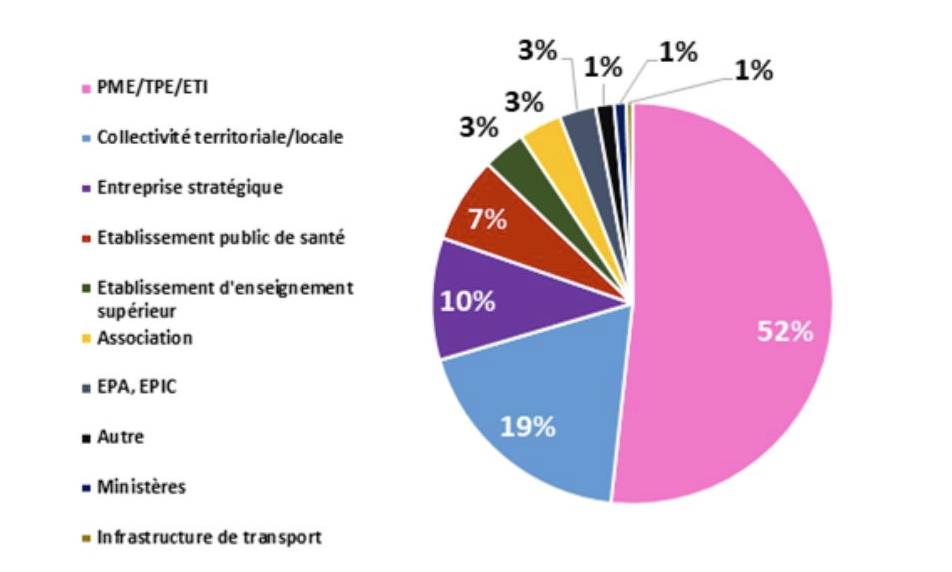
Breakdown of entities targeted by ransomware cyberattacks in NATO / armed forces:
Here is a recap of what was observed in cyberattacks in 2021:
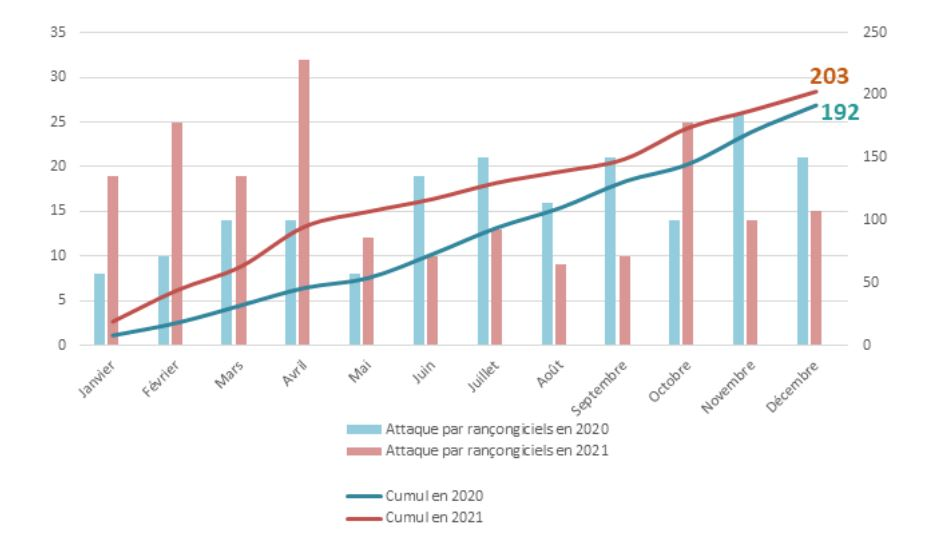
Increase in ransomware attacks: ransomware was one of the leading online threats in recent years and this trend continued in 2021. Cybercriminals are increasingly using this technique to encrypt victims' data and demand a ransom to restore access.
Proliferation of phishing attacks: phishing attacks are becoming increasingly sophisticated and aim to trick users into believing they are receiving a trusted email or message. These attacks can be used to steal confidential information or distribute malware.
Growth of the Internet of Things (IoT): the IoT is a network of connected devices that can be targeted by cybercriminals. Attacks on IoT devices are increasing and can be used to gain access to private networks.
Increase in targeted attacks: targeted attacks aim to compromise a specific organization or individual, generally to steal confidential information. These attacks are often carried out by professional cybercriminal groups and are becoming more frequent.
Growing use of illegal cryptomining: illegal cryptomining consists of using a victim's computer hardware to mine cryptocurrencies without their consent. This technique became increasingly popular among cybercriminals in 2021.
Chart
And the cyberattack forecasts for 2023?
It is difficult to accurately predict how cyberattacks will evolve in 2023, as they are constantly changing and depend on many factors. However, here are some trends that could develop in 2023:
Growing use of machine learning by cybercriminals: machine learning enables systems to adapt and improve over time by analyzing large volumes of data. Cybercriminals may increasingly leverage this technology to enhance the efficiency and accuracy of their attacks.
Emergence of new online threats: new online threats are likely to emerge in 2023, probably in the form of new attack techniques or new types of malware. It is important to stay vigilant and keep up to date with the latest threats in order to prevent them.
Development of quantum cybersecurity: quantum cybersecurity uses the principles of quantum physics to protect data and networks. This technology may become increasingly common in 2023, which could render some current threats obsolete.
Proliferation of phishing attacks: phishing attacks are becoming increasingly sophisticated and aim to trick users into believing they are receiving a trusted email or message.
In 2023, cyber risks for companies will likely be even greater than they are today. Cybercriminals will continue to develop new techniques to target businesses and steal their sensitive data. In addition, the growing use of artificial intelligence and machine learning by cybercriminals could make attacks more effective and harder to detect.
It is important for companies to take steps to protect their systems and data against cyberattacks. This may include deploying advanced security technologies, training employees in good online security practices, and establishing security incident management procedures.
In conclusion, cyber risks for companies will still be significant in 2023, and it is essential for businesses to take measures to protect themselves against cyberattacks.