
Data breaches represent a risk for companies of all types and sizes. When a company is the victim of a data breach, it can have serious consequences both for the business and for the individuals whose data has been compromised.
First, data breaches can have major financial consequences for companies. If sensitive data, such as financial information or personal data, is disclosed to unauthorized third parties, this can lead to lawsuits and penalties. In addition, companies may be required to pay compensation to the people whose data has been compromised, which can represent a significant cost.
Furthermore, data breaches can also lead to a loss of trust from the company's customers and partners. If people do not feel safe sharing their data with a company, they may be less inclined to use its products or services. This can have a negative impact on the company's sales and profits.
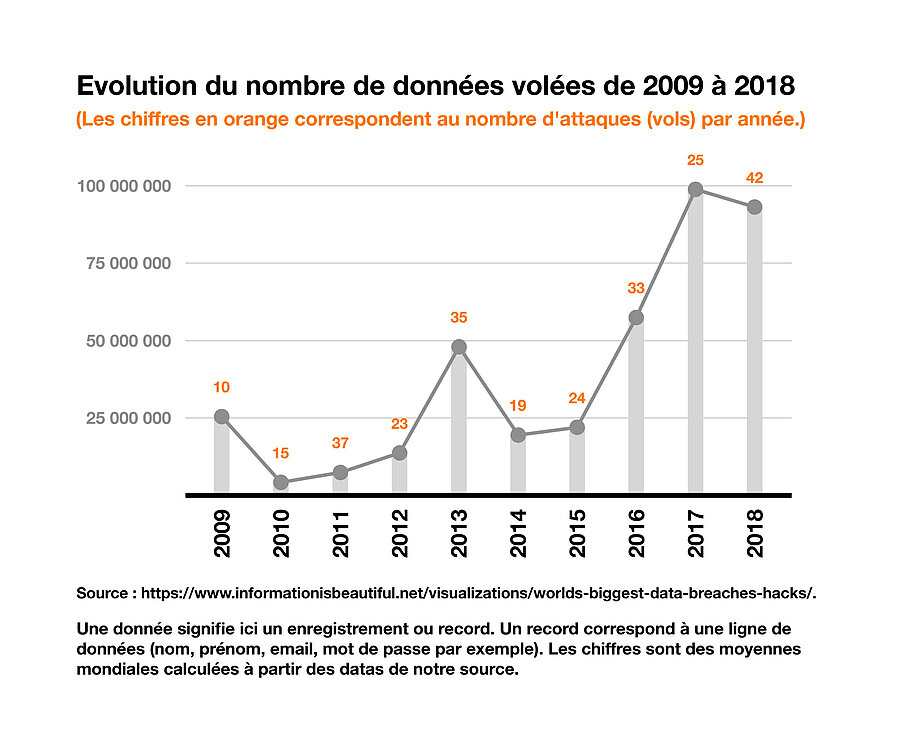
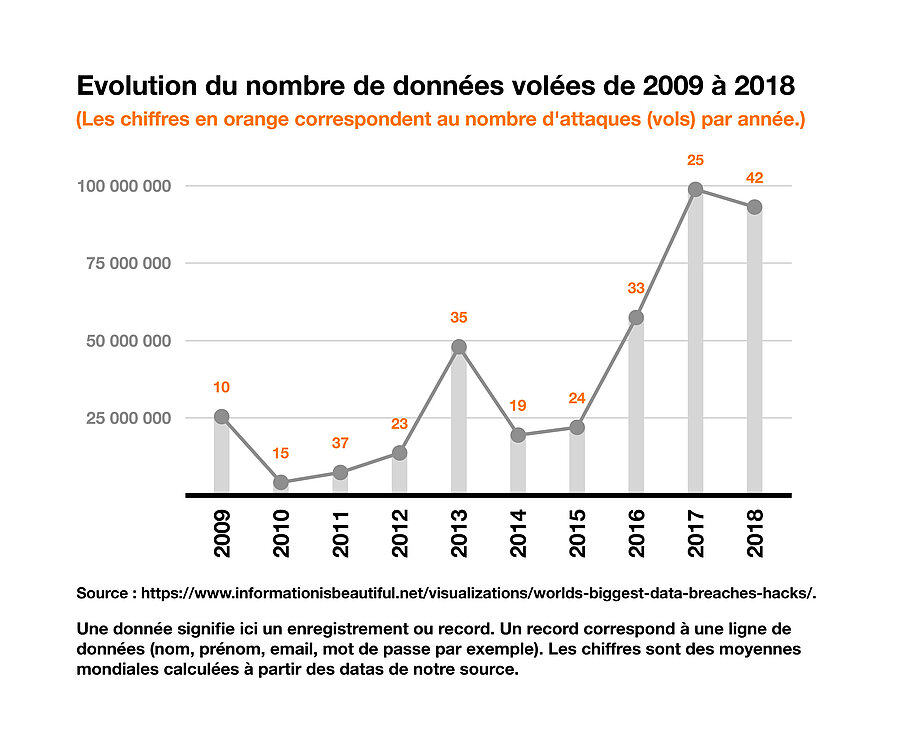
A continuous evolution over the years, with an estimated 40,000,000 million private data records on the Darknet in 2022!
Finally, data breaches can also have a negative impact on a company's reputation and credibility. If a company is perceived as poorly managing the security of its data, this can harm it in the eyes of customers and potential investors.
It is therefore important for companies to take steps to protect their data and prevent breaches. This may include implementing security measures such as cryptography and strong authentication, as well as training employees so they understand security risks and know how to manage them. By taking these measures, companies can minimize the risk of data breaches and protect their reputation and credibility.