
AI in business: a competitiveness lever
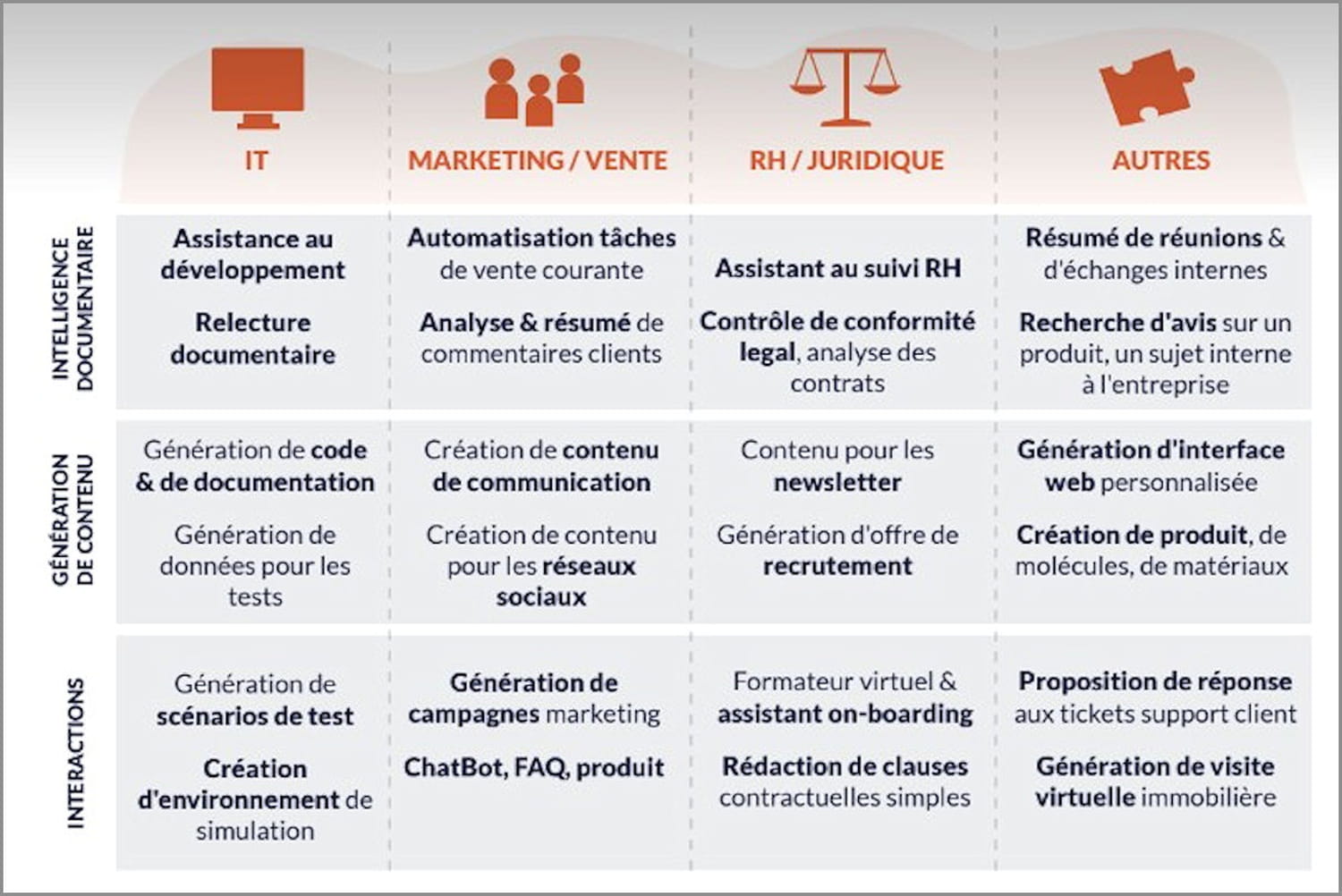
In the business world, AI is seen as a catalyst for transformation. It makes it possible to analyze massive volumes of data to improve decision-making, optimize supply chains, automate repetitive tasks and strengthen cybersecurity.
In production and logistics, predictive algorithms make it possible to anticipate demand, optimize inventory management and streamline distribution. In customer service, chatbots and virtual assistants reduce wait times and improve user experience. AI is also revolutionizing finance with models capable of detecting fraud and assessing credit risk.
French companies are not standing still: the government is planning massive investments, notably through the INESIA Institute, designed to oversee and evaluate AI models. In addition, Bpifrance has announced a 10 billion euro investment plan to support startups and companies specialized in AI. However, these initiatives face major concerns: data sovereignty, European regulation, particularly with the AI Act, and dependence on compute infrastructure dominated by the United States and China. Europe must therefore build a competitive ecosystem while ensuring technological independence.
Cloud LLMs vs. On-Premise LLMs: stakes and differences
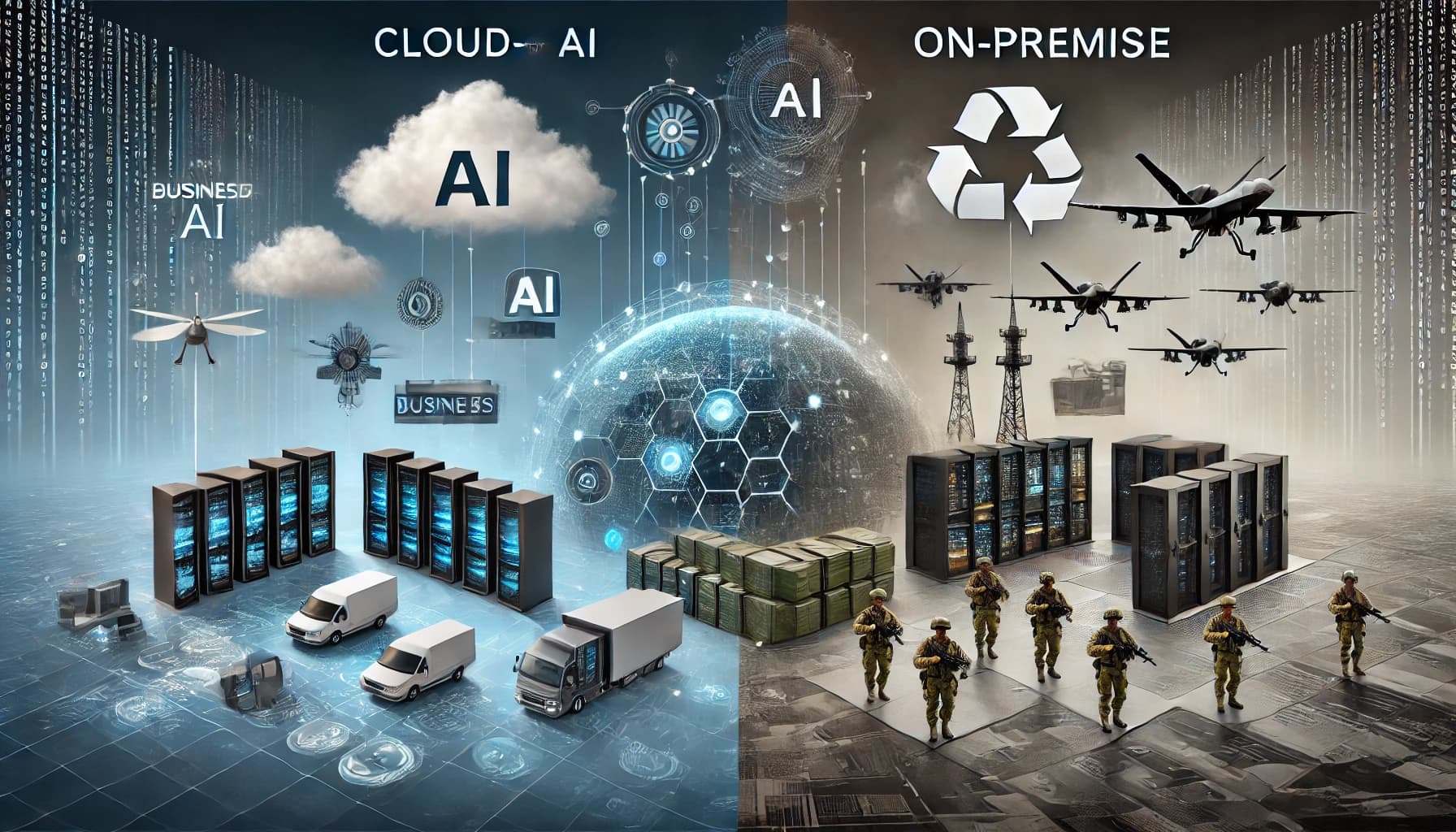
Companies and public sector organizations have a choice between two main approaches to leveraging large language models (LLMs): Cloud and On-Premise. Cloud solutions, such as ChatGPT, offer considerable flexibility and compute power, accessible via remote infrastructures managed by tech giants like OpenAI or Google. This approach allows for continuous model updates and immediate access to the latest AI advances, but it also implies dependence on external providers and raises data sovereignty challenges.
Conversely, On-Premise solutions, such as SYLink LLM with Mistral AI, Llama 3, etc., allow companies and institutions to deploy AI models directly on their own infrastructures. This approach guarantees full control over data and ensures compliance with strict regulations, particularly in cybersecurity and the protection of sensitive information. In the military and defense fields, where confidentiality and system resilience are critical, the On-Premise option is often preferred to avoid any exposure to risks associated with foreign Cloud infrastructures.
Military AI: a strategic revolution
From intelligence to combat, AI is becoming an essential tool for armed forces. In France, the creation of the Ministerial Agency for Defense Artificial Intelligence (AMIAD) marks a decisive turning point. With a budget of 300 million euros and a dedicated supercomputer, the goal is clear: to make France a leader in military AI.
This ambition fits into a global dynamic in which the major powers are stepping up their efforts. The IHEDN describes military AI as a strategic disruption, on a par with nuclear weapons in their time. Among the concrete applications:
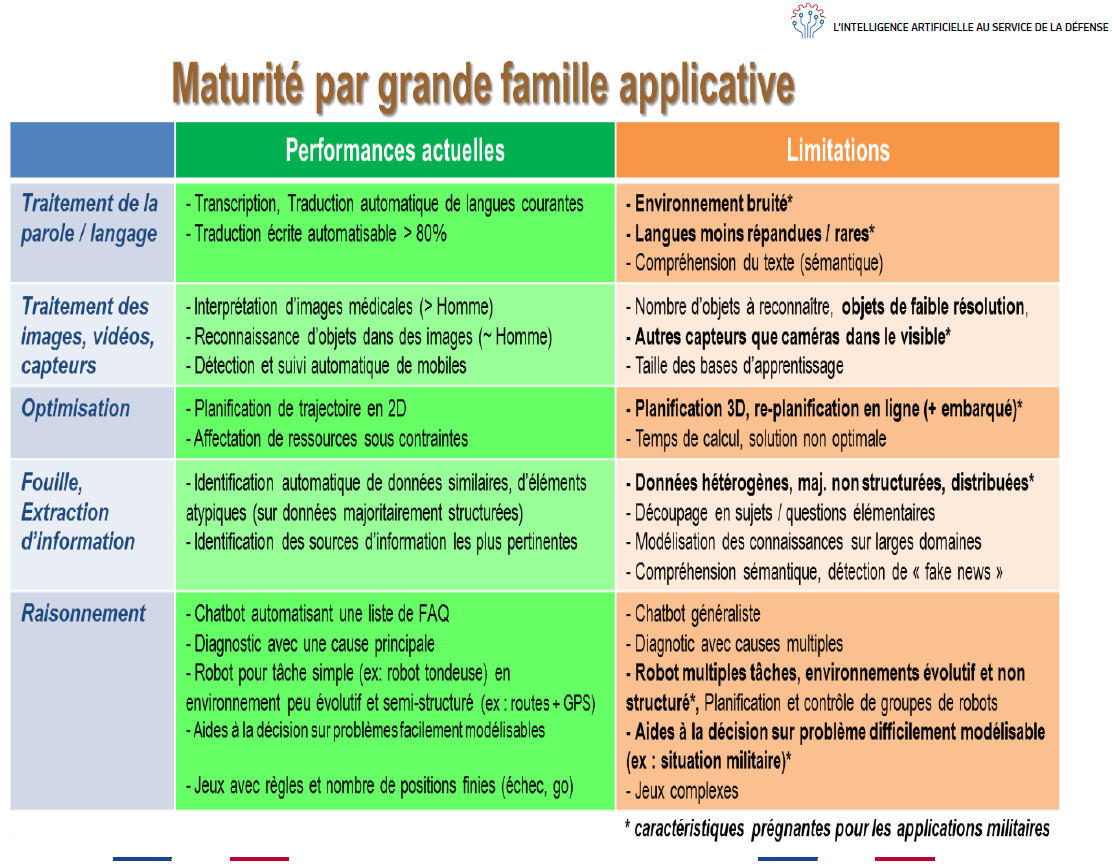
Autonomous drones and combat robots: Capable of carrying out reconnaissance, support and attack missions, these devices reduce human exposure to danger.
Advanced battlefield analysis: Through the processing of satellite images and automated detection systems, military commands can anticipate and coordinate their strategies in real time.
Cyber defense and intelligence: AI makes it possible to identify cyberattacks before they cause damage and to automate threat detection on sensitive networks.
Intelligent communication systems: By leveraging AI, military forces can strengthen the security of communications and ensure the resilience of critical infrastructures.
With a defense AI budget set to double by 2030 and reach 2 billion euros, France is accelerating its efforts. In addition, the agreement between Mistral AI and Helsing, a defense AI specialist, demonstrates a determination to develop sovereign capabilities and reduce dependence on American technologies.
Synergies between civilian and military AI
The convergence between digital companies and the defense sector is accelerating. Thales, but also innovative startups such as Mistral AI, are actively collaborating with the State to develop dual-use solutions, usable in both civilian and military settings. This trend underscores a reality: AI innovation is no longer confined to a single sector, and the line between civilian and military uses is becoming increasingly thin.
Data centers, the cornerstone of AI development, also illustrate this dynamic. With the announcement of 35 new dedicated sites in France, supported by massive investments (109 billion euros earmarked), the country is giving itself the means to accelerate in this technology race.
A technological and geopolitical challenge
While AI offers immense prospects, it also raises strategic questions. Dependence on foreign semiconductors, particularly from Taiwan, and the dominance of American players such as Nvidia in graphics processors are a reminder of the need for European technological autonomy.
Furthermore, the proliferation of modern conflicts, described as "AI war labs", demonstrates the growing impact of AI on military strategies. Between strike optimization and surveillance automation, the use of AI in war operations raises significant debates around its regulation.
Artificial intelligence is establishing itself as a driver of transformation across all domains, whether to optimize industrial processes or to strengthen military capabilities. France, aware of the stakes, is investing massively to structure its ecosystem. Nevertheless, between the race for innovation and the need for regulation, the challenge remains immense: how can we tap the full potential of AI while ensuring its control and ethics?